
Introduction
Some people may think that hoarding ads (also called signs or outdoor ads) are out of date in a world full of digital ads, emails, and social media posts. But take another look. People still pay attention to these huge signs on roads, at busy intersections, and in business districts. What makes them so strong and useful?
The answer lies in the study of how people act and think.
Digital ads are all over the place, but people often ignore or skip them because there are so many of them. On the other hand, hoarding ads use psychological tricks to get people’s attention, help them remember the brand, and change their behavior, sometimes even better than a computer could.
Here are 10 psychological reasons why billboard ads are still powerful.
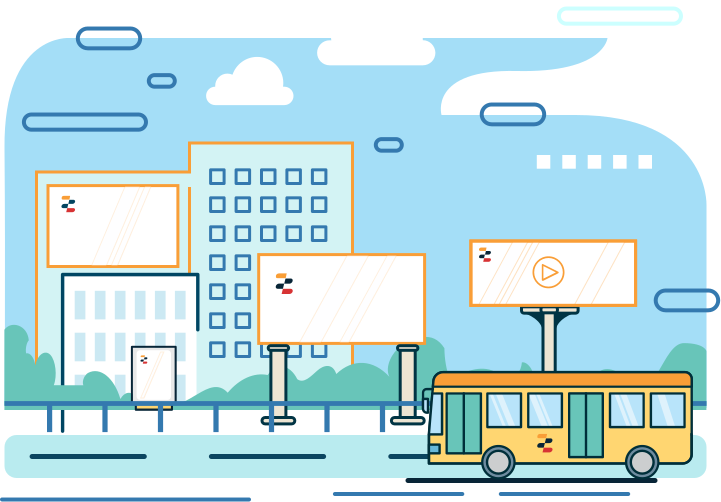
🧠The Psychology of Advertising
Why the Brain Loves Big and Bold
The human brain is designed to process visuals 60,000 times faster than text. This is why large, vibrant hoarding ads immediately grab attention. Our visual cortex responds to scale, color, contrast, and motion — all common elements of effective hoardings.
Visual Attention and Cognitive Impact
In behavioral psychology, attention is a limited resource. Hoarding ads benefit by eliminating competition in their immediate environment, often making them the only visual stimulus in a space — especially on roads or large buildings.
10 Psychology-Based Reasons Why Hoarding Ads Work
1. Dominance in sight and immediate effect
Large, high-contrast images on billboards take up most of a viewer’s field of vision. What psychologists call the “orienting response” is a normal response to new or prominent stimuli. This visual dominance makes you pay attention.
2. Repeating Something Makes It Familiar
The mere contact effect is one of the oldest ideas in psychology. People tend to like things more when they see them a lot. This is done by hoardings, which are seen every day and make people subconsciously familiar with a brand.
3. Anchoring in place Memory gets stronger
Hoardings make recall based on where something is. People remember the lessons that go with certain places. This is especially helpful for small businesses, real estate projects, and political campaigns that want to be seen across the area.
4. Outdoor ads get in the way of digital work
Hoarding ads stand out in the real world, unlike digital ads that mix in with feeds and sidebars. This change from the norm helps you remember things and pay attention. You can think of them as “pop-ups” in real life, but not as annoying.
5. Imagery that Sets Off Emotions
Emotional design, like happy faces, families, fear of missing out (FOMO), and lives that people want to live, is used to make hoardings work. People are more likely to be interested in a brand when these visual cues make them feel strong emotions like happiness, fear, desire, and nostalgia.
6. Being there in person builds trust
People think that a brand is established and trustworthy if it can afford to hoard a lot of items. This has to do with the authority principle in psychology. People believe businesses that show they are sure of themselves and have a lot of resources.
7. Easy to remember for a long time
Most hoarding ads follow the golden rule: strong images with little writing. This makes it easier for the brain to remember the lesson over time by lowering the cognitive load. It’s not a surprise that hoardings are often easier to remember than internet ads with a lot of information.
8. Social proof and group influence
It’s social proof when thousands of people see the same billboard every day. Our minds are set up to accept what other people are exposed to. Seeing the same billboard over and over in a busy area sends the message, “This must be popular or important.”
9. Communication Under the Skin Through Constant Exposure
Our brains take in what we’re storing even if we’re not aware of it. This is called low-involvement processing. We are more likely to accept and interact with the brand when we see it again in a different setting.
10.Making a habit loop
Putting hoarding ads in your daily routines, like when you drive to work or walk to school, can make them stick in your mind. It’s hard to break the mental link that’s made when you see the same ad every day while doing the same thing.
🚀Real-World Examples of Hoarding Ad Success
Brands of FMCG
Billboards for brands like Coca-Cola and Pepsi continue to be the most popular, especially around holidays or when new products come out. Their plan was to use little writing, strong images, and a lot of repetition.
Campaigns for politics
During election years, there are a lot of big ads because they make people feel like they are present and powerful. In the eyes of voters, visibility means success.
Real estate and schooling
Billboards are a common way for real estate companies and coaching centers to reach people in their local areas. These are big investments, and hoardings give them more authority and permanence.

🔗How billboards work with digital marketing
Bridging Offline to Online
A compelling poster with a website or QR code can bring people who aren’t online to online platforms, making people who are just looking at it into active leads.
Multi-Touch Journeys for Customers
People are more likely to trust a brand when they see it on a billboard and then again online. It has been shown that these various touchpoints increase the number of sales.
🔮The Future of Hoarding Ads
whereas we live in a tech-driven world, promoting ads are still around. Instead, they are changing. Hoardings are getting smarter, sharper, and more effective with the help of digital features like AI-based targeting and smart interaction.
Now, they’re more than just boards on a pole; they’re full-on brand experiences that affect how we engage with and remember.
Conclusion
Ads on billboards are more than just buildings; they’re also psychological tools. In ways that digital ads don’t always work, these big brands can affect people in ways that digital ads can’t. Marketers can use hoardings more carefully than ever if they understand the psychological triggers that make them work.
Despite the rise of digital marketing, hoarding ads remain a psychologically powerful advertising format. Their physical presence, emotional impact, and high visibility make them an essential part of any serious brand strategy.
In the noisy world of computers, the word that stands out the most is sometimes the one that’s on a 40-foot board.

1. Do billboard ads work in rural areas?
Yes, especially if it’s made in the local language and takes into account societal factors. In places where internet use is low, they are a powerful way to get information across.
2. Can hoardings be used to target certain groups?
Absolutely. Advertisers can pick places that have a lot of foot and car traffic by looking at data on traffic patterns.
3. Are digital hoardings better than the old ones?
It changes with each effort. Digital hoardings give you more options and keep people interested, while static ones keep you exposed all the time without any breaks.
4. How long should an ad for billboards last?
Depending on the product and marketing goal, 30 to 90 days is the best amount of time for people to remember the brand.
5. How much money do you make from spreading ads?
It varies, but well-placed hoardings in high-traffic zones can deliver excellent ROI, especially when combined with digital marketing.
Contact GKADS Today
📞 Phone: +91-9885691111
📧 Email: gkads2721@gmail.com
🌐 Website: https://gkads.in/
🔗 Connect with Us on Social Media
💼 LinkedIn: https://www.linkedin.com/company/gkads27/
📸 Instagram: https://www.instagram.com/gkads_27/